Active Learning
Learning on the Move. In Every Subject.
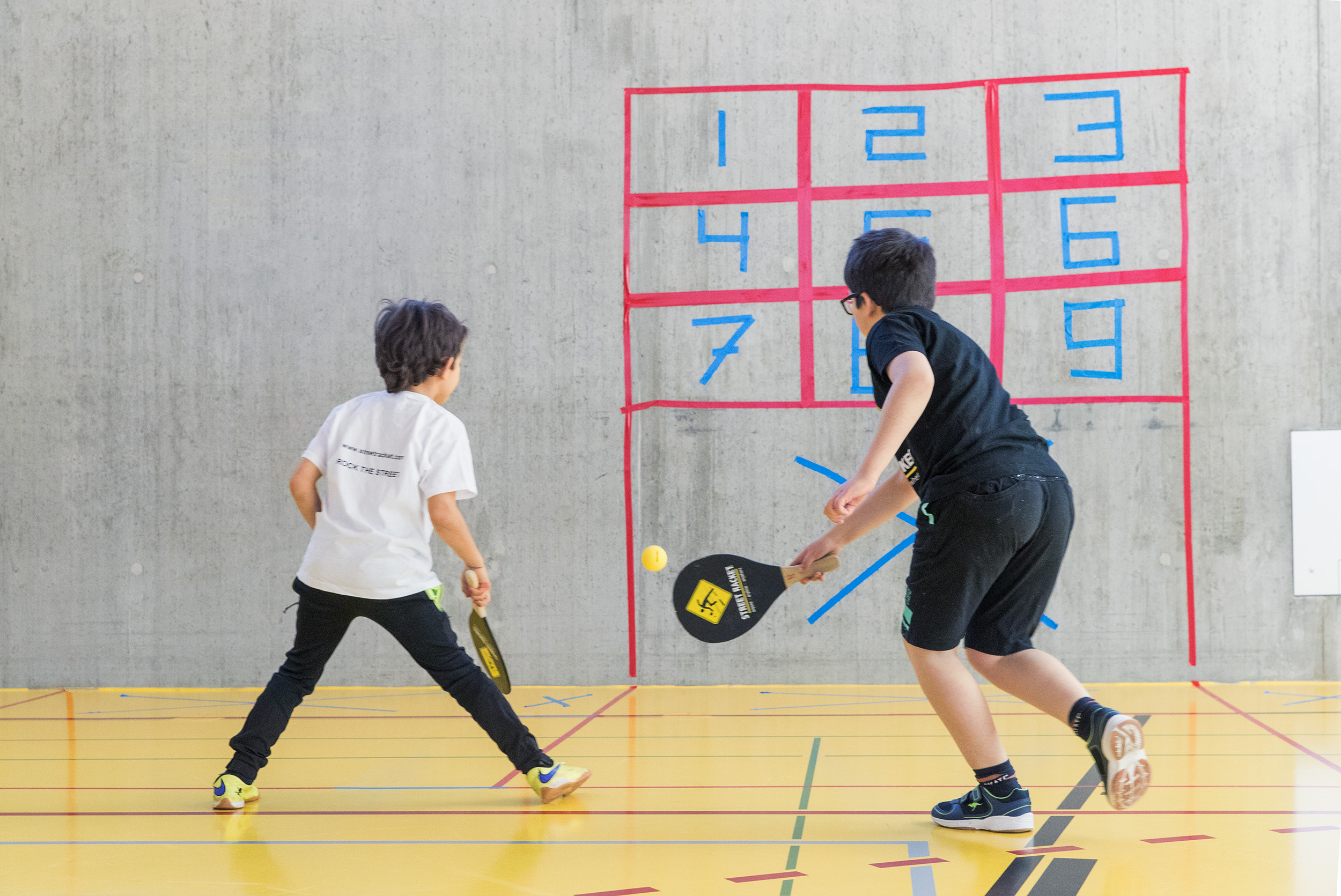
Active Learning is the core of the Street Racket method. We bring movement not only into PE, but straight into the classroom: into maths and languages just as much as geography, music or crafts. With chalk, a racket and a ball, the playground becomes a place to learn.
Background
Why Movement Belongs in Learning
Children and young people spend a large part of the school day sitting down. In Switzerland, for example, around one in three 6- to 16-year-olds does not reach the recommended 60 minutes of physical activity per day, and activity declines with age.1 School is the one place where every child can be reached. If movement only happens in PE, a great deal of potential is left unused. Research shows what active lessons can achieve:
More Attentive in Class
A meta-analysis of 42 studies with more than 12,000 children shows: physically active lessons increase physical activity and have a clear positive effect on learning behaviour during the lesson. The effect on overall educational outcomes is smaller, but also positive.2
More Time on Task
A systematic review of 39 studies finds positive effects of classroom-based physical activity on on-task behaviour, meaning how long children stay focused on a task.3
Movement That Fits the Content
Movement helps most when it is part of the task. In a randomised trial, preschool children who practised numbers through matching movements scored higher than children with unrelated movement or seated teaching.4
Learning Outdoors
The setting matters too: in a randomised trial with around 1,900 children in China, an extra 40 minutes outdoors per school day reduced the share of children newly becoming short-sighted over three years from 39.5 to 30.4 per cent.5
How It Works
Three Ways to Combine Movement and Learning
Movement Breaks
Short active phases between learning sequences refresh body and mind and help children concentrate for longer.
Learning With Movement
Content is practised while moving, for example repeating vocabulary while balancing the ball on the racket.
Learning Through Movement
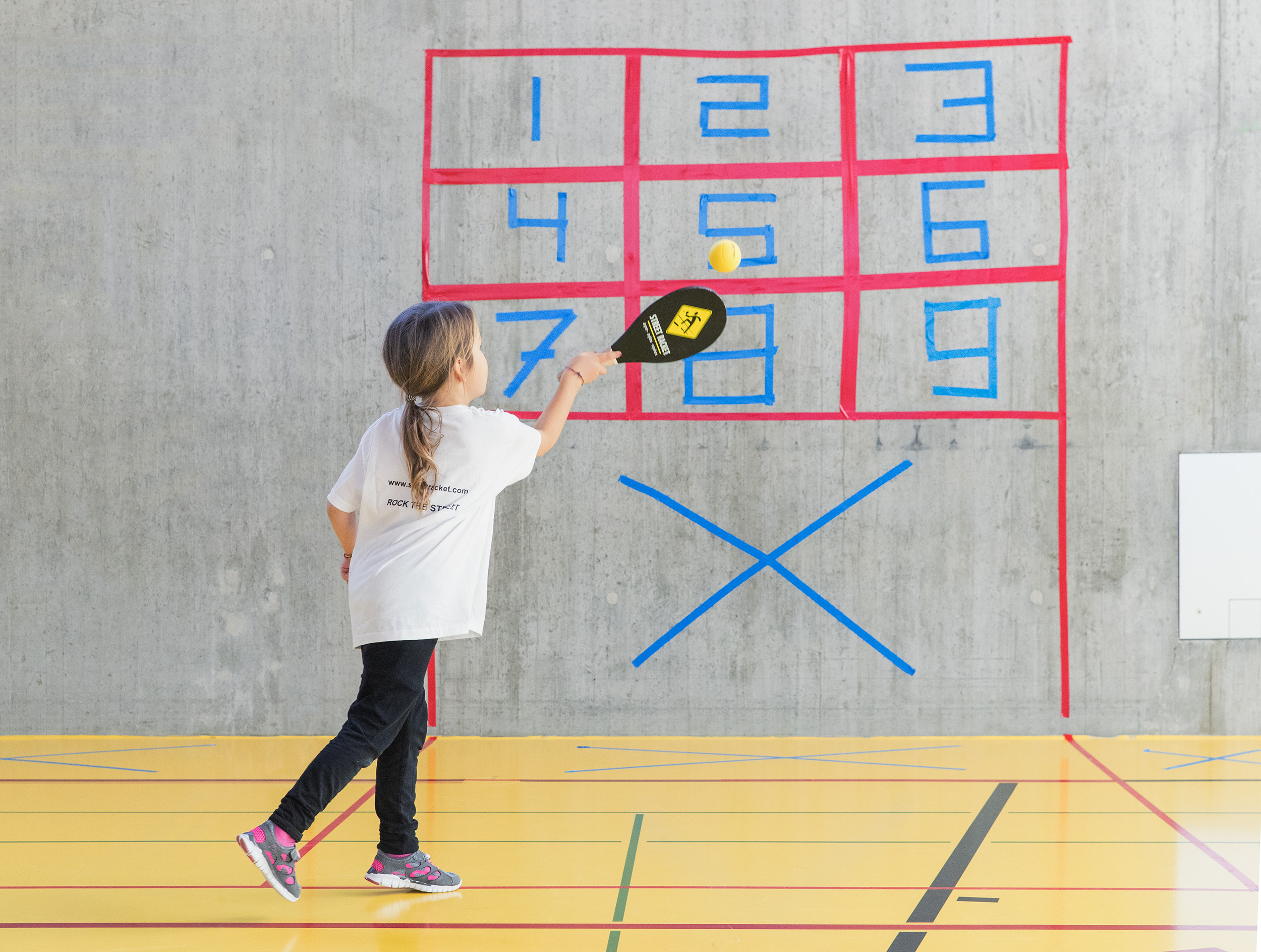
The movement is part of the task: hit the right field and the sum is solved. Aim for the right letters and a word is formed.
The Difference
More Than a Racket Sport
Padel, pickleball and other racket sports need a court, a net and usually a dedicated facility. Street Racket needs a few chalk lines. That is what makes the difference for schools: the court appears wherever learning happens, on the playground, in the corridor or in the gym.
This makes Street Racket not just something for PE, but a tool for every teacher.
- No set-up, no net: A court is drawn with chalk or marking tape in a few minutes.
- Everyone plays: Simple rules and cooperative games let mixed-ability classes play together straight away.
- Head and hand: Rallies train hand-eye coordination, concentration and executive functions.
- Curriculum links: The exercises are mapped to subject and cross-curricular competences of the Swiss Lehrplan 21.
Examples
Games for Every Subject
A small selection. The curricula contain many more games for your subjects and topics.
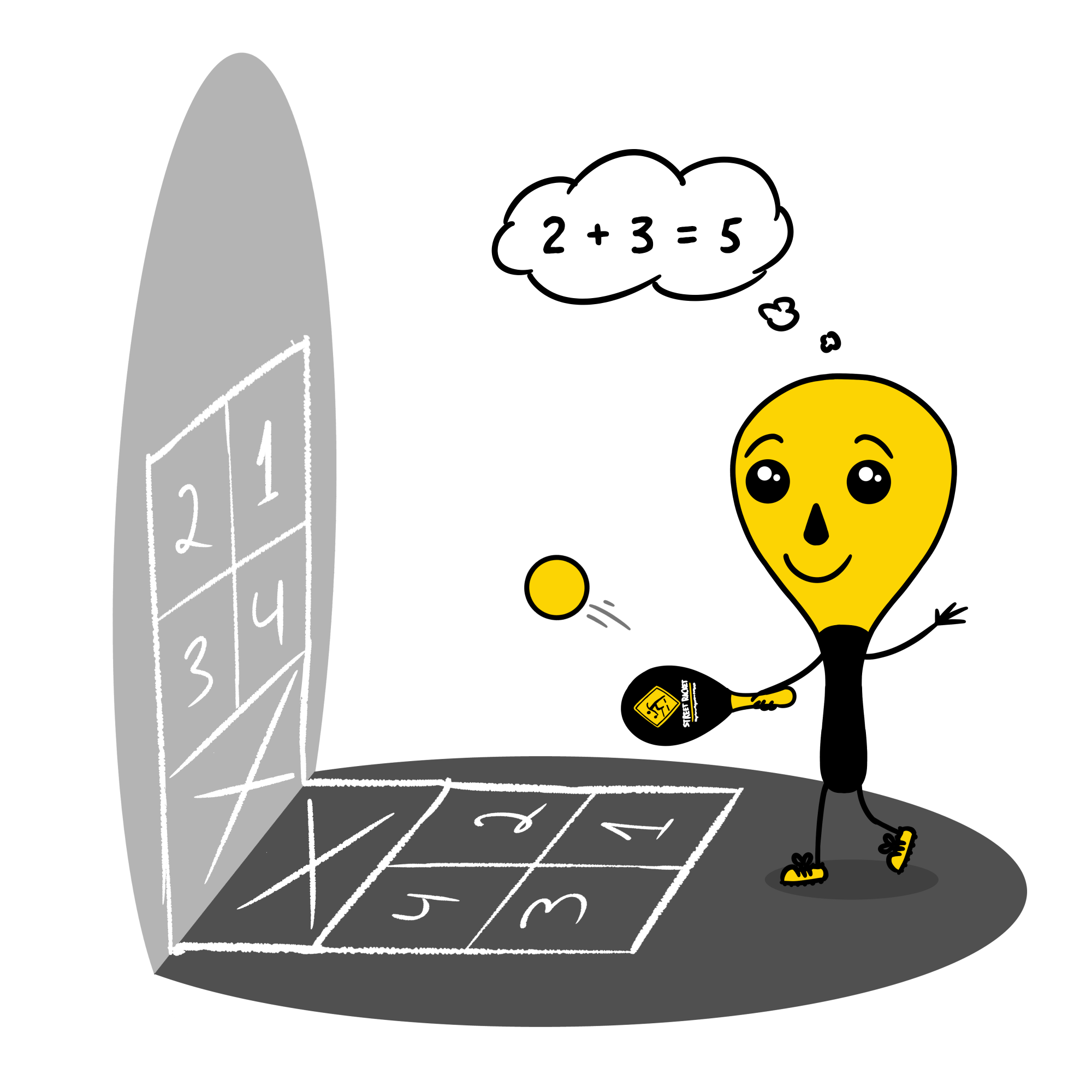
Turbo Mental Maths
Numbers are written on the wall. Whoever hits one adds it to the running total until the agreed limit is reached.
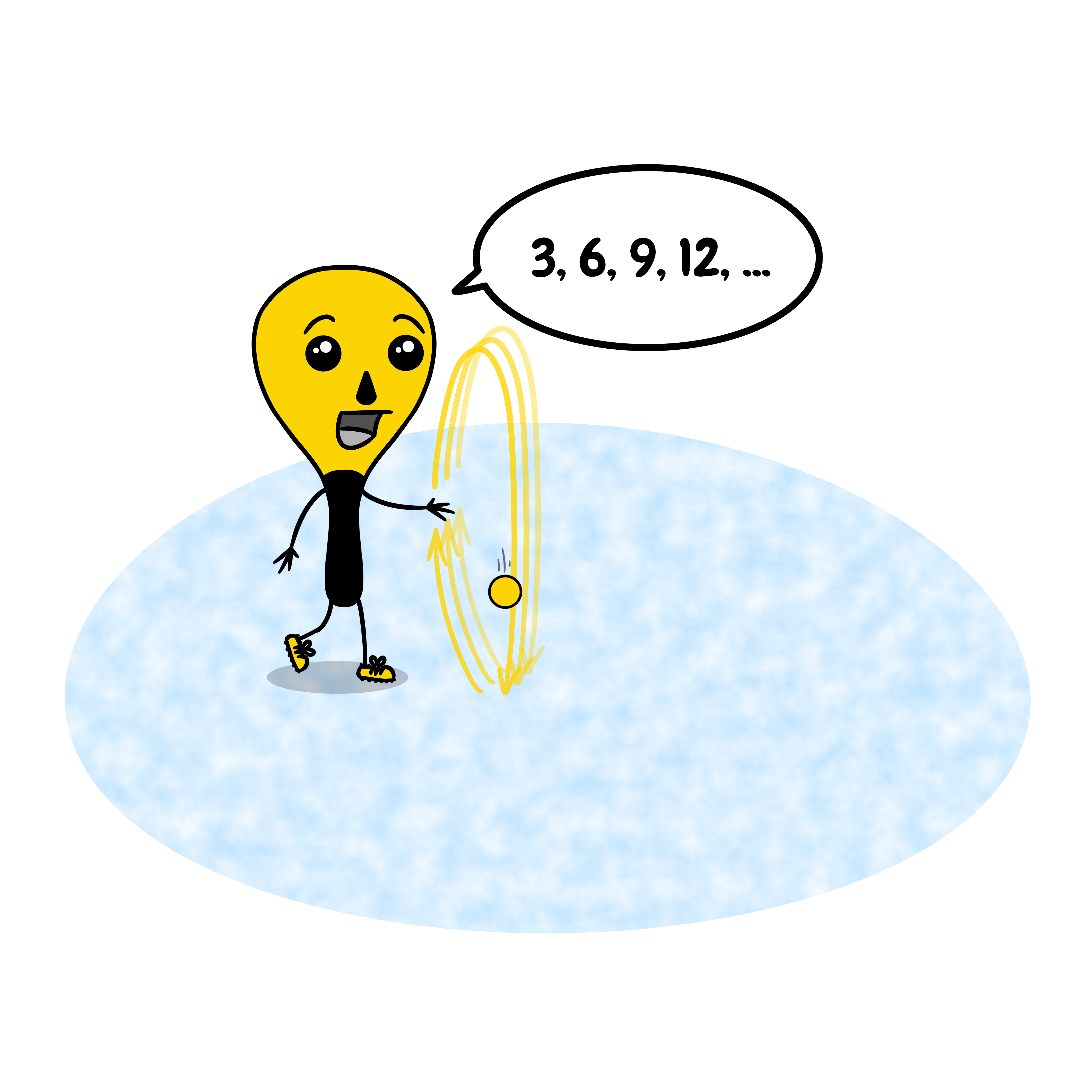
Times Tables Rally
Each time the ball bounces, the next number in the sequence follows: 3, 6, 9, 12 and so on up to ten times.
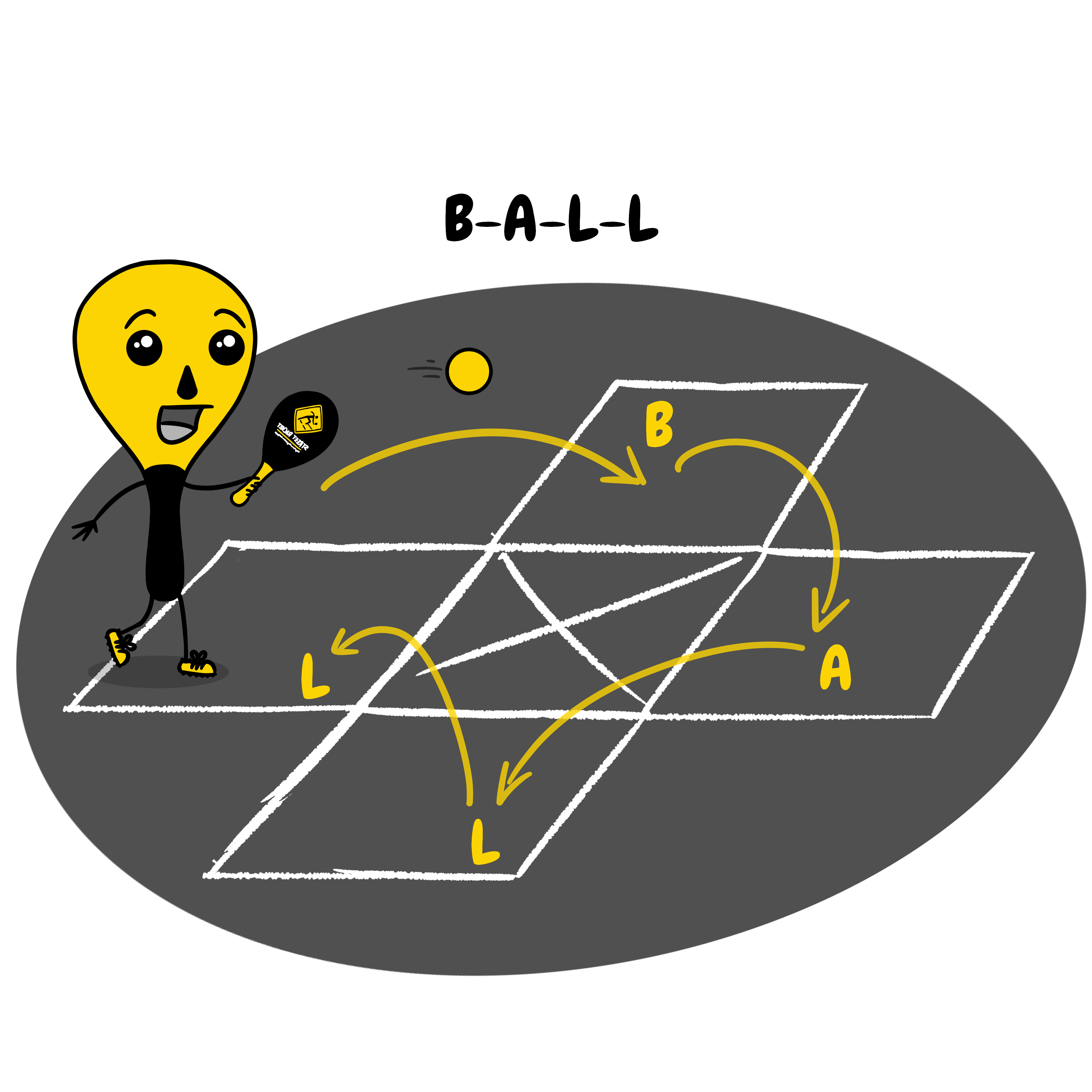
Spelling
The ball travels from field to field and each hit adds the next letter. Spelling words are played step by step.
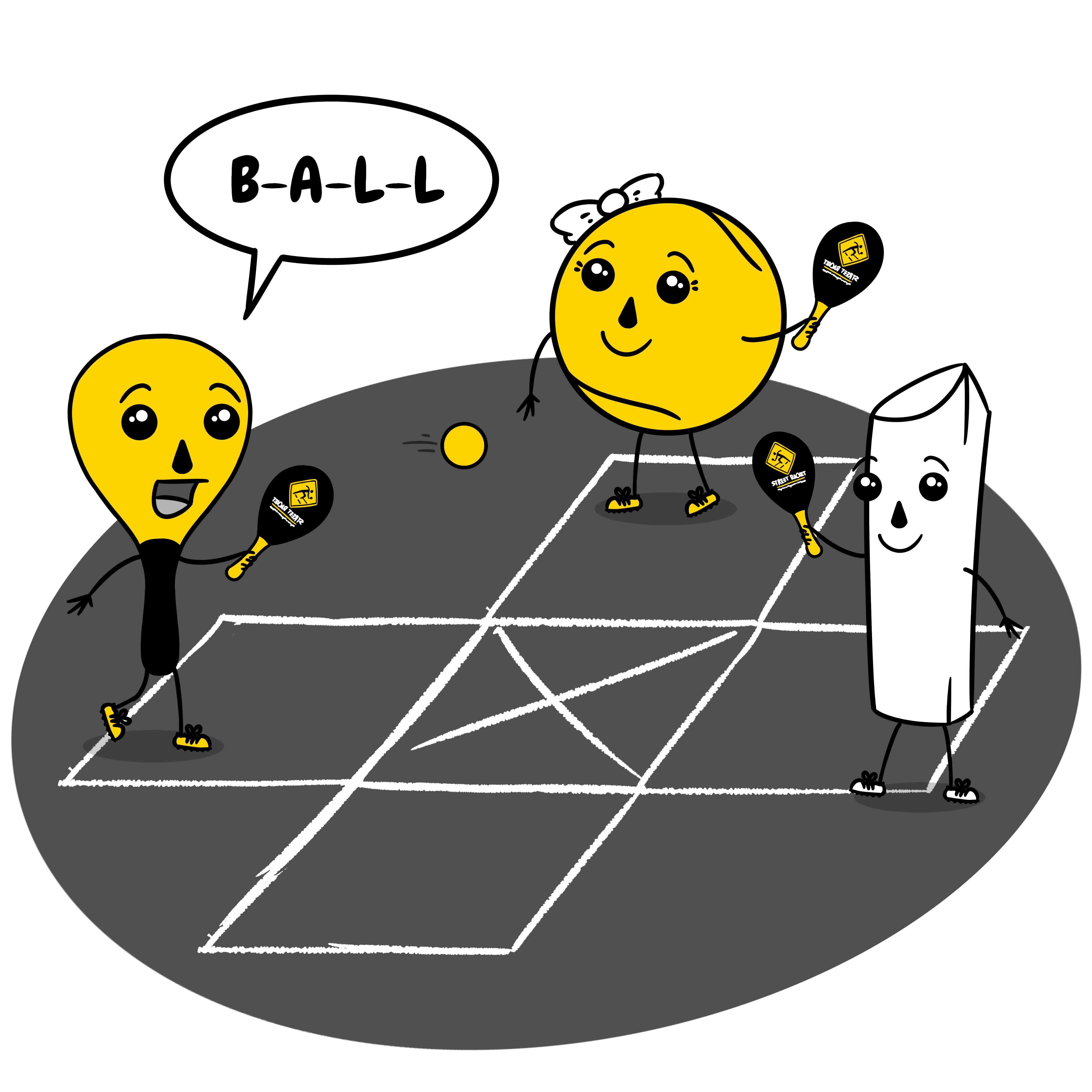
Vocabulary on the Cross Court
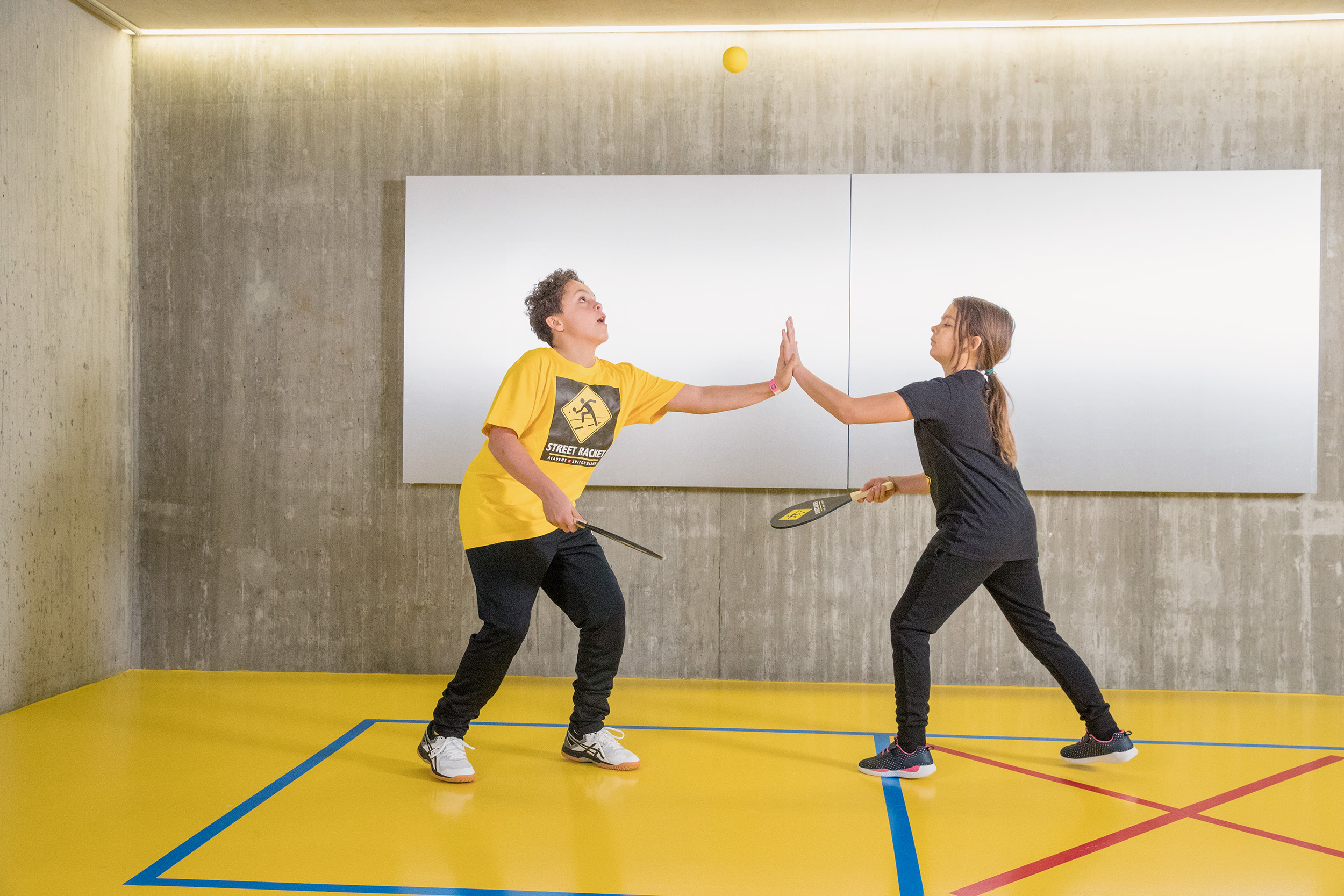
Three or four players on the Cross Court: whoever plays the ball says a word, whoever receives it gives the translation. Or the group spells a foreign word, one letter per shot.
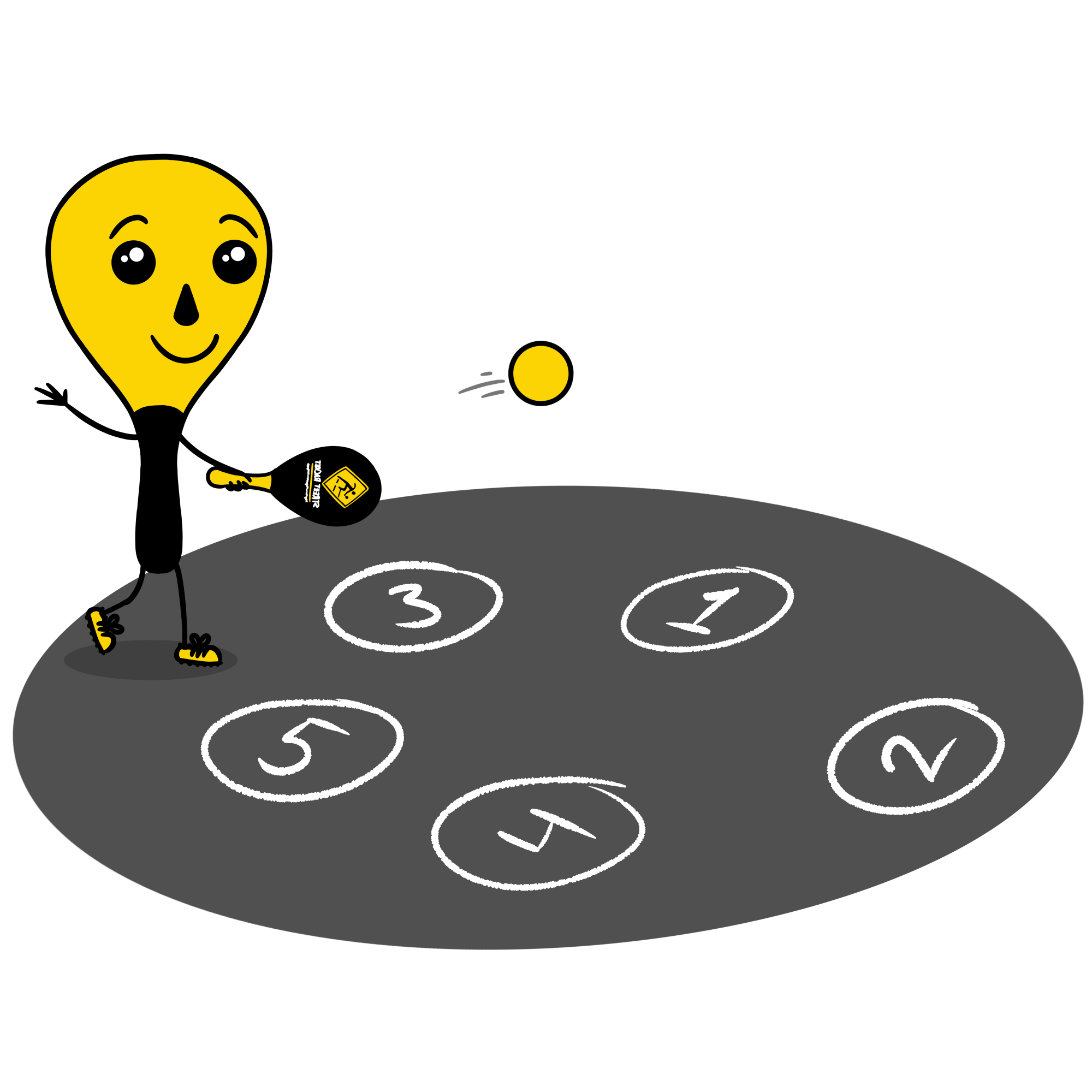
Island Game
Chalk islands carry numbers, countries or regions. Hit an island and solve the matching task, for example naming the capital or a neighbouring country.
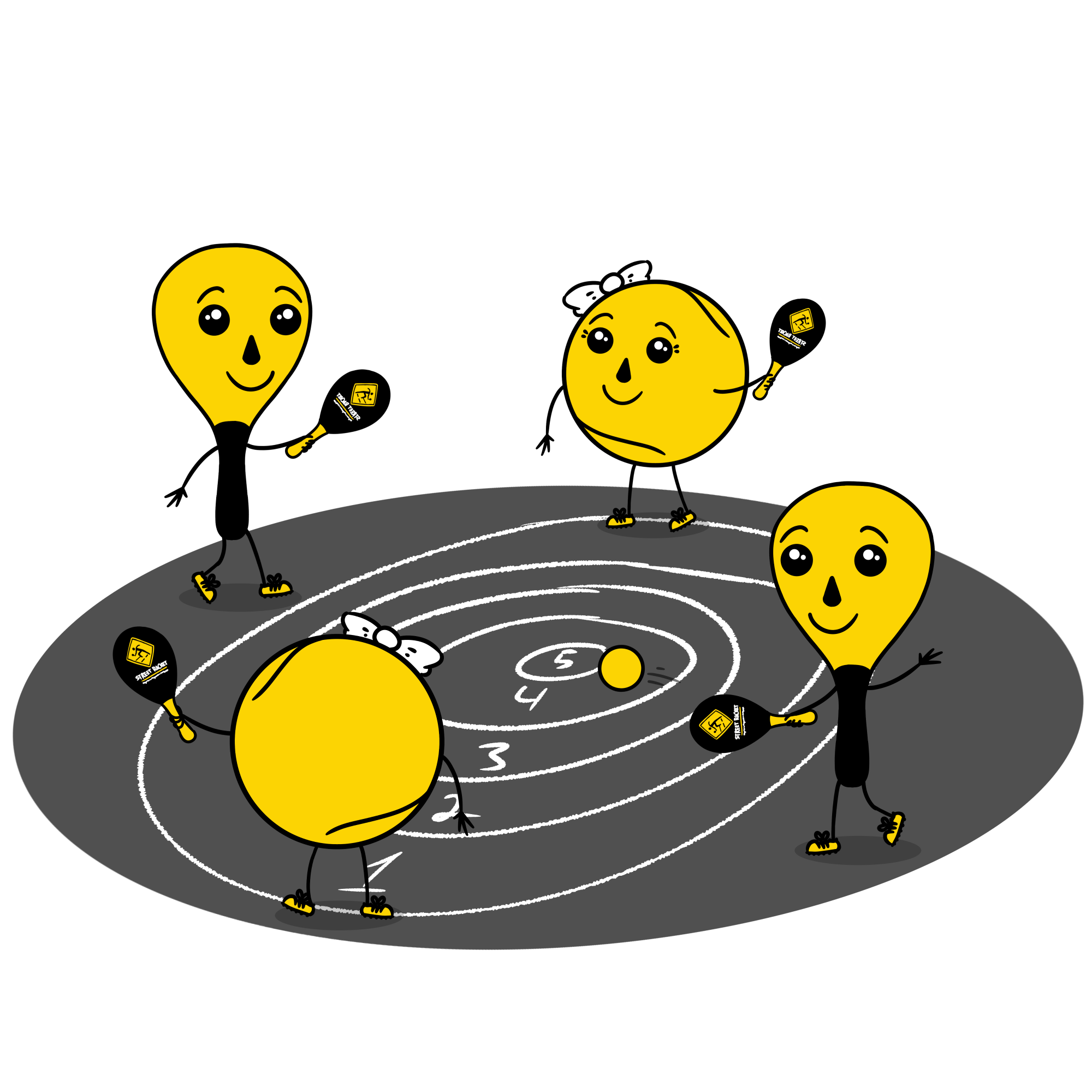
Target Board
The rings and sections of the target are labelled, for example with eras, terms or answers. From outside, the children aim for the right field.
And in other subjects: in music with rhythm and beat during rallies, in crafts by building your own rackets from a construction manual, and in art by designing your own mascots and courts.
Get Started
How to Bring Active Learning Into Your Lessons
With the online curricula you can start right away on your own. With the Level 2 training, your school team puts the approach into practice together.
Curricula
Online Curricula
The online curricula show every game in short step-by-step videos. The «Active Learning» curriculum is designed for the classroom, while «Games & Motor Skills» lays the foundations.
- Content: Two curricula with over 700 videos
- Focus: Games for every subject
- Use: In the browser and as an app
- Access: Monthly, yearly or as a school licence
Teacher Training
Level 2: Active Learning
The training «Active Learning and the Active Classroom» shows your school team how to teach maths, language and general studies content through movement, and how to transfer the approach to your own subjects.
- For: Whole school teams and teachers of all levels
- Duration: 90 minutes, 120 or 150 minutes recommended
- Group size: Up to 35 participants per instructor
- Included: Course materials and loan equipment
Sources
- Swiss TPH: SOPHYA – Swiss children's Objectively measured PHYsical Activity. Final report 2016.
- Norris E, van Steen T, Direito A, Stamatakis E (2020). Physically active lessons in schools and their impact on physical activity, educational, health and cognition outcomes: a systematic review and meta-analysis. British Journal of Sports Medicine, 54, 826–838.
- Watson A, Timperio A, Brown H, Best K, Hesketh KD (2017). Effect of classroom-based physical activity interventions on academic and physical activity outcomes: a systematic review and meta-analysis. International Journal of Behavioral Nutrition and Physical Activity, 14, 114.
- Mavilidi MF, Okely AD, Chandler P, Domazet SL, Paas F (2018). Immediate and delayed effects of integrating physical activity into preschool children's learning of numeracy skills. Journal of Experimental Child Psychology, 166, 502–519.
- He M et al. (2015). Effect of time spent outdoors at school on the development of myopia among children in China: a randomized clinical trial. JAMA, 314(11), 1142–1148.
Insights